

16 th Sunday in Ordinary Time, July 21, 2024 (Season B)

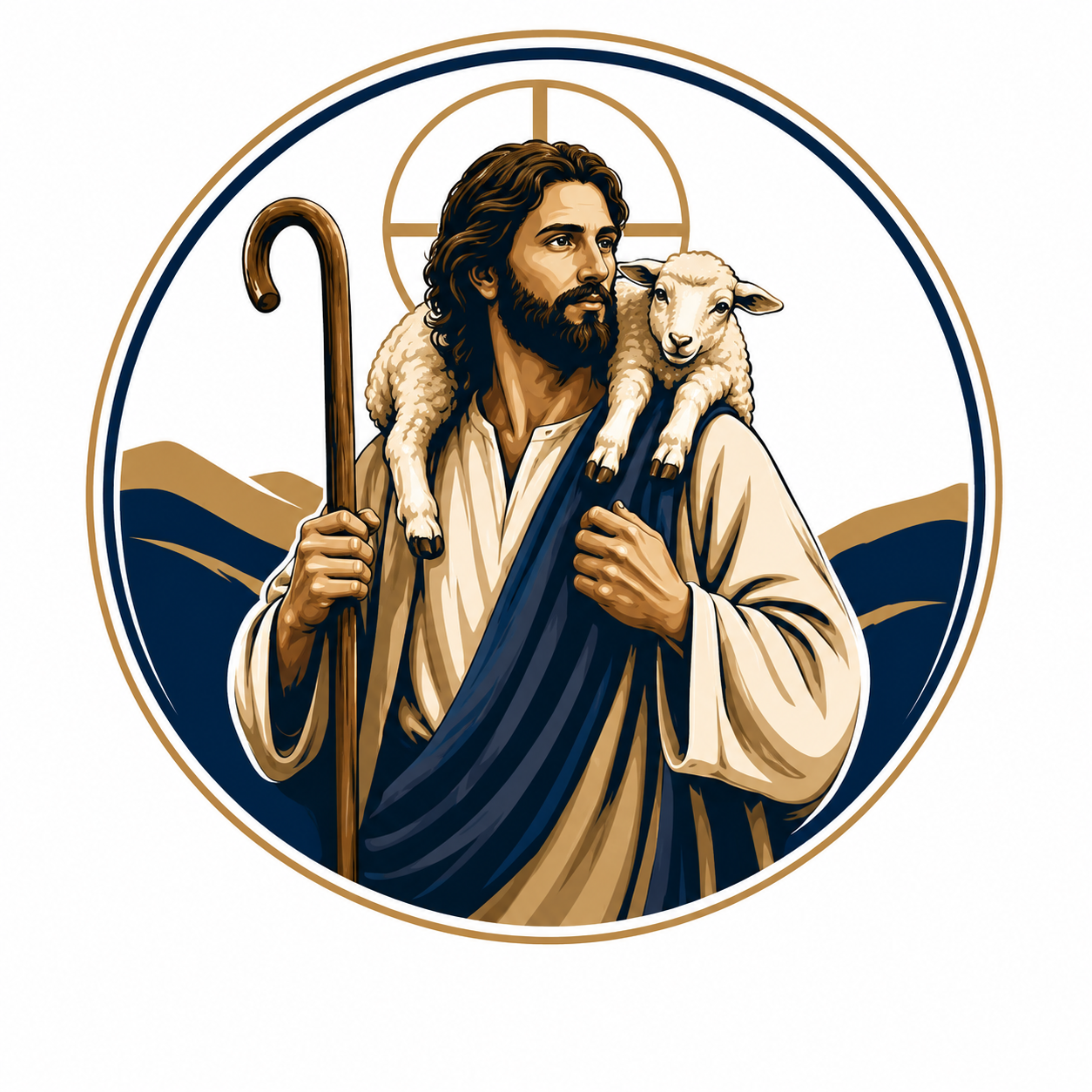
          Peace be with you on this, our celebration of the 16 th Sunday in Ordinary Time.  So, as I meditated on these readings for a while I thought these could be appropriate for “Good Shepherd Sunday.”  In the first reading we hear God admonishing the corrupt shepherds of ancient Israel for scattering God’s sheep.  Then, I’m sure everyone knew which Psalm we were listening to with the opening words.  “The Lord is my shepherd; I shall not want.”  In Paul’s letter to the Ephesians, we’re reminded that Jesus leads both Jews and Gentiles equally, to salvation.  An impossible task in 1 st Century Israel, for any shepherd except God.  And finally in Mark’s Gospel, we’re reminded one more time, Jesus is the Good Shepherd with the words, “his heart was moved with pity for them, for they were like sheep without a shepherd.”

          OK, anyone ever teach children?  If you’re a parent that’s certainly a silly question but for those of us who have attempted to teach young people in a classroom environment, you know things can be real interesting.  Today’s readings reminded me of one occasion when I was teaching a group of 3 rd graders about the Good Shepherd.  I was attempting to show examples that God calls all of us to be good shepherds sometimes using our own words, examples, and actions.  At the end I was hoping they would see me as the good shepherd in the classroom that day, so I asked, “Who is the good shepherd here today?”  Front row center, a hand shot up, “Jesus Christ!”  “OK.  That’s always right but what do you think I am today as the teacher?”  “You’re the sheepdog,” came the enthusiastic answer.

Wow.  You know, I’ve never forgotten that innocent little guy’s answer that day and wondered, that’s really not a terribly bad image.  Jesus Christ’s, the ultimate Good Shepherd’s own sheepdog helping with God’s flock of humanity.  You ever watched a well-trained herding sheepdog in action?  It’s really pretty amazing.  Words that come to mind are, loyal, fast, intelligent, instinctive, and endurance.  The metaphor of the Good Shepherd’s sheepdog, gives a quote from St. Benedict of Nursia a vivid new perspective, “The first degree of humility is prompt obedience.”  Let me repeat, “The first degree of humility is prompt obedience.”  Now please, please, before you hard core independently minded Americans sitting here become incensed, I am speaking metaphorically about sheep and dogs, not literally.  Personally, I’m proud to be called part of the Good Shepherd’s flock and maybe sometimes even one of His obedient sheepdogs helping with the flock.

          Now today’s Gospel is a continuation of last Sunday’s Gospel when Jesus originally sent the 12 out on mission.  Today they’re back and reporting everything they did and taught, and they are tired, and from the sounds of it, so is Jesus.  Jesus says, “Come away by yourselves to a deserted place and rest a while.”  Unfortunately, there doesn’t seem to be any rest for the weary.  When they arrive at the deserted place they are met with a vast crowd and Jesus’ heart is moved with pity, “for they were like sheep without a shepherd; and he began to teach them many things.”  And it’s probably safe to say, Jesus’ disciples did exactly as he did.

          Friends, God intends for us to live in community.  The heart of the community is the family, and the foundation of family is the marriage.  We sometimes forget the very first instruction God gave Adam and Eve had nothing to do with eating or not eating fruit.  The first instruction from God is found in GN 1:28. “God blessed them, and God said to them; Be fertile and multiply.”  Now flash forward thousands of years and we have God’s loving redemption of a fallen humanity through his life, suffering, death, and resurrection.  And this gift from Jesus called Christianity is neither individualism nor collectivism, neither capitalism nor communism, but communalism.  And sadly, unselfishness is not easy for us fallen creatures but without unselfishness community just does not work.  We need to learn it, to be conditioned to it, to be socialized.  We learn this lesson of unselfishness only in a community – most effectively in the family.

          I tell every couple preparing for marriage, don’t marry to find happiness; marry to give happiness.  God’s design was that this lesson of marriage, this universal vocation of unselfish love, this experience of becoming yourself by giving yourself away, should expand outward, like circles of water rippling from a stone thrown into a pool.  Of course, the first center is the first act of self-giving love of God’s, both in creating us and in redeeming us at the price of his own life.  Without that self-giving of the divine stone thrown into the pool’s center, there are no ripples of the human water.  There is no human substitute for God.

          In the Bible, the community is often described as a flock of sheep but regardless of what metaphor we use, it is part of God’s design for human existence.  And within community we all have a fundamental Christian vocation of self-giving.  Whether we are preachers, teachers, healers, farmers, bankers, lawyers, hamburger flippers, or comedians.  We work for others, and others work for us.  We row each other’s boat.  As Christians, we work not only to make money but to make love.  And my sisters and brothers, there are many kinds of love.  Some of them are sentimental, and most of them are not. 

By Teresa Stephens • September 2, 2026
22nd Sunday in Ordinary Time, August 30, 2026
By Gail Johnson • September 2, 2026
Paul T. Keil, 18-19 July 2026 16 th Sunday in Ordinary Time: Season A Peace be with you and welcome to our celebration of the Mass for the 16 th Sunday in Ordinary Time. OK, some of you may remember I’ve said before, in Matthew’s Gospel, Chapters 5, 6, and 7 comprise the whole Sermon on the Mount, but did you know Chapter 13, where we are today, is often called the Sermon of the Parables. In this single chapter Matthew strings together seven separate parables from Jesus. Today we just heard numbers two, three, and four. Last weekend we heard the first one with the Parable of the Sower and what happens to the seeds scattered in different places. Next weekend you’ll hear the final three parables from Chapter 13 so, be sure to come back. So, what is Jesus saying in these readings. Last week we heard the parable about seeds as an allegory for Jesus’s words falling on a path and being eaten by birds, falling on rocky ground and withering with no roots, falling into thorns and being choked by life’s anxieties, and falling on fertile soil to bear fruit. Today we have Jesus giving us another parable about planting seeds and again, just like last week, Jesus’ disciples ask him to explain the parable. And since He stops to explain both parables about planting, he just might be trying to emphasize something important here for his disciples, and for us. One thing is clear in these parables however, God’s Kingdom will always coexist in this physical world with forces opposing it, like the wheat and the weeds growing together. Now many religious people struggle with this condition. Some see it as predestination. A weed in the wheat field or a seed in the rocks must represent people predestined to go to hell. That’s what it literally says, right? Still others ask in frustration; this is God we’re talking about, why does God’s Kingdom have to struggle with opposing forces at all? Why doesn’t God just get rid of the evil? Well, our old friend, St Thomas Aquinas wrote quite a bit about good and evil coexisting in our fallen world. He said sometimes the two are so tightly interwoven that you couldn’t have certain types of good without certain types of evil. For example, he said simply, “there would be no virtue of the martyr without the cruelty of the tyrant.” Friends, God delights in our freedom, our intelligence, and our cooperation when we freely make the decision to accept God’s love. Without free will we cannot choose to love. Jesus’ explanation of the wheat and weed parable certainly helps when he says; “The harvest is the end of the age, and the harvesters are angels” and in the next verse he says; “The Son of Man will send his angels.” There is a very important take-away here every single Christian should remember. Eternal judgment belongs to God alone, not to anyone else – period. This is a consistent message Jesus gives us in all four Gospels but unfortunately, there are those who sometimes forget this simple divine fact about humanity’s relationship with the unlimited creator of the universe. We may perceive an individual as being bad or even intrinsically evil but judgment for their immortal souls belongs exclusively to God. I always like an old adage that goes like this, “if I ever get to heaven, I may be surprised by who I see there, and they may be even more surprised to see me.” I’ll admit, over the years for a long time, as I’ve meditated on this parable about weeds and wheat or last week’s parable about seeds, especially the ones falling into thorns choked by worldly anxiety, there was something always bothering me. You see, if we’re not careful both parables can make life, heaven, and hell sound kind of random or worse yet, they can make God’s love sound like it is exclusively reserved for preselected people. I know now however, there is nothing further from the truth. If you’ve lived life for a while and think back to times when you were say maybe,,, struggling in school, or first dating, or trying to make ends meet while raising a family, or competing for promotions at work, or trying to buy that first house, you realize there may have been times when your life wasn’t very spiritually fruitful. In fact, I now realize there were times in my own past when thoughts of God, salvation, or prayer were nowhere in my daily routine. I even wonder; was there a period in my life when I was one of those weeds or a seed in the thorns? Thankfully, with reflection on the whole of Scripture, guidance from the Church, and maybe some help from the Holy Spirit I realize now these parables are not “either / or” propositions. God doesn’t intentionally create some people as weeds and some people as wheat nor does God throw souls into the wind to randomly fall in the thorns, or on stony ground, or in fertile soil. If you’re not careful, you can come to those conclusions, however. You can read the Bible too narrowly and pick out verses here and there that help support your personal image of what you want God to be. Those tend to be the same people who like to do God’s judgment work for him. Here’s the thing; some of us here today may have actually spent some time as those ugly weeds but at some point, with God’s help, we decided to change and now we’re wheat growing in that good old fertile soil. My sisters and brothers, sin must never be viewed as a permanent state. Like we heard from the Book of Wisdom today, “you gave your children good ground for hope that you would permit repentance for their sins.” This is the greatest gift of our Christian faith; God loves us all so much, even great sinners, God is always ready to forgive. So, here’s a challenge and homework for us all today. Most of us know people out there from all age groups, but especially some of our youth, who may be temporarily living life like the weeds in our parable today or maybe tangled in those thorns of life’s tribulations. First and foremost, we must be confident, sin is not a permanent state of life, second, we don’t judge, third, pray for them no matter how nasty they may seem. And finally, if we’re really, really brave, we offer them a hand to pull them up and out of the weeds, rocks, or thorns into God’s fertile soil.
September 5, 2025
22nd Sunday in Ordinary Time 
By Gail Johnson • July 31, 2025
17th Sunday in Ordinary Time, July 27, 2025
By Teresa Stephens • May 27, 2025
Paul T. Keil, 25 May 2025
By Teresa Stephens • May 7, 2025
Paul T. Keil, 4 April 2025
By Gail Johnson • October 15, 2024
28th Sunday in Ordinary Time
By Teresa Stephens • September 17, 2024
Paul T. Keil ,
By Teresa Stephens • August 21, 2024
20 th Sunday in Ordinary Time: Year B